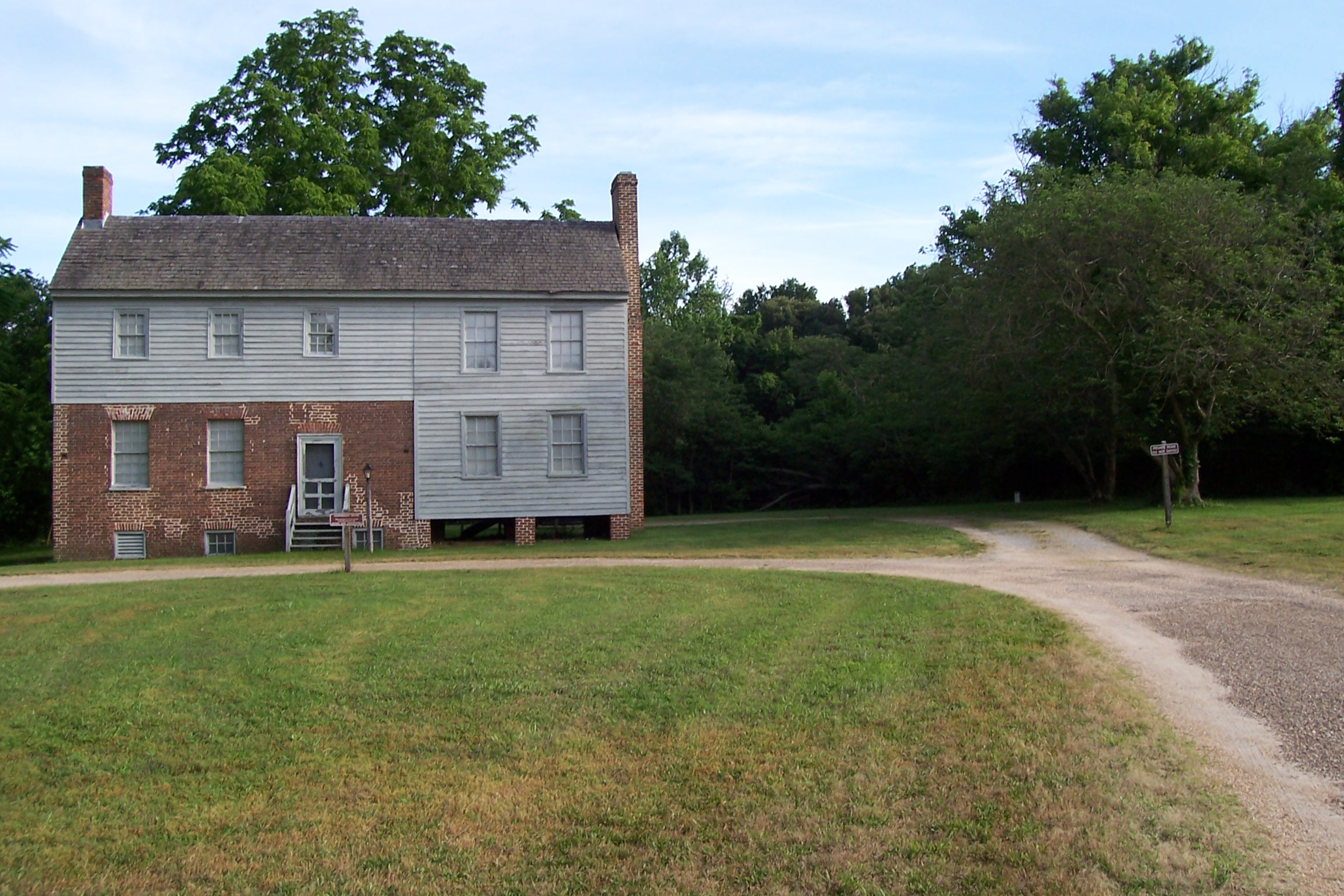
The woods of Cold Harbor are remarkably peaceful today.
A short drive northeast of Richmond, narrow trails wind beneath tall trees and shallow depressions in the ground mark the remains of Civil War trenches. Across the road, rows of white headstones stand in a small national cemetery. Nearby, an old farmhouse recalls a time when this otherwise unremarkable patch of Hanover County became the scene of unimaginable suffering.
At first glance, it is difficult to imagine that thousands of men once fought and died here, but on June 3, 1864, Cold Harbor became the site of one of the most disastrous Union assaults of the American Civil War. The fighting left thousands of casualties, wounded soldiers stranded between opposing armies, and a landscape scarred by trenches, graves, and the destruction of war. More than 160 years later, many of those scars remain visible.
According to some visitors, the battlefield has never entirely settled into silence.
Over the years, Cold Harbor has accumulated an extraordinary collection of ghost stories. Visitors have described mysterious figures moving through the trees, sounds of soldiers marching where no one can be seen, and even apparitions appearing among the very trenches where soldiers fought generations ago.
Some of these accounts are vague legends, passed from one person to another. Others come from identifiable witnesses who have shared surprisingly detailed recollections of their experiences.
Are these encounters evidence of something supernatural, or simply the product of an unusually powerful historic landscape? There may never be a definitive answer. But to understand the ghost stories of Cold Harbor, we should begin with the history that inspired them.
The Battle of Cold Harbor: May 31–June 12, 1864
Despite its name, Cold Harbor isn’t particularly cold, and there certainly isn’t a harbor anywhere nearby. The name is generally believed to have originated from the old English term for a roadside lodging that offered travelers shelter without the comforts of a hot meal. By the middle of the nineteenth century, Cold Harbor was little more than a rural crossroads northeast of Richmond. That changed dramatically in the spring of 1864.
The American Civil War had entered its fourth bloody year, and Lieutenant General Ulysses S. Grant had assumed overall command of the Union armies. Determined to bring the war to a conclusion, Grant launched an aggressive campaign against General Robert E. Lee’s Army of Northern Virginia.
Beginning in May, the opposing armies fought a relentless series of battles through central Virginia. From the dense forests of the Wilderness to the formidable defenses of Spotsylvania Court House and North Anna, Lee repeatedly managed to block Grant’s advance. However, Grant refused to abandon his campaign.
Unlike some earlier Union commanders, he did not retreat northward after suffering a setback. Instead, he continued maneuvering south, attempting to move around Lee’s right flank and threaten Richmond, the Confederate capital. By the end of May, the opposing armies had reached the crossroads of Old Cold Harbor, approximately ten miles northeast of the city.
The crossroads was strategically important. If Union forces could break through the Confederate defenses, they might place themselves between Lee’s army and Richmond, potentially threatening the Confederate capital itself.
On May 31, Union cavalry under Major General Philip Sheridan captured the crossroads. Additional fighting followed on June 1, when Union infantry attacked Confederate positions and briefly penetrated portions of their defenses.
Grant believed that a larger, coordinated assault might succeed where these smaller attacks had failed. He ordered a major offensive for June 2, but the movement of Union reinforcements did not proceed as planned. Exhausted soldiers struggled through difficult overnight marches, and the attack was repeatedly delayed.
Those delays proved enormously valuable to Lee.
Confederate soldiers spent the additional time strengthening their defensive positions, constructing an extensive network of trenches and earthworks. By the evening of June 2, Lee’s army occupied a formidable position, with overlapping fields of fire covering the approaches to its lines.
For the Union soldiers preparing to attack the following morning, the situation had changed dramatically. What might have been a promising opportunity two days earlier had become an exceptionally dangerous proposition.
The National Park Service’s history of Cold Harbor provides an excellent overview of the campaign and the events leading to the disastrous assault of June 3.
June 3, 1864: An Assault That Grant Would Regret
At approximately 4:30 a.m. on June 3, thousands of Union soldiers advanced toward the Confederate lines. Moving through darkness, uneven terrain, woods, and ravines, the advancing formations quickly encountered devastating Confederate infantry and artillery fire.
Some Union soldiers briefly reached or penetrated the Confederate defenses. Elsewhere, entire formations were stopped before they could get anywhere close. The attack rapidly collapsed.
Popular accounts frequently claim that 7,000 Union soldiers were killed within thirty minutes. That figure confuses deaths with total casualties, which also include wounded and missing soldiers, while relying on an estimate of the losses during the initial attack that historians continue to question. Whatever the precise numbers, the human cost was appalling.
The entire Battle of Cold Harbor resulted in approximately 17,000 to 18,000 casualties on both sides, according to commonly cited estimates.
And for many Union soldiers who survived the initial assault, the worst was not yet over. Pinned down beneath Confederate fire, men who could neither advance nor retreat began digging shallow trenches using cups, plates, bayonets, and whatever other tools they could find.
The opposing armies remained dangerously close together, and hundreds of wounded soldiers were stranded between their lines. As the Virginia summer heat intensified, those unable to crawl back to safety endured days without adequate food, water, or medical attention.
Grant and Lee eventually negotiated a temporary truce on June 7, allowing Union soldiers to recover their wounded and bury the dead. But for many of the men lying between the armies, help arrived too late.
The two sides continued exchanging artillery and rifle fire for several more days before Grant finally withdrew his army on the night of June 12. Rather than abandoning his campaign, he crossed the James River and shifted his attention toward Petersburg.
Cold Harbor had been a Confederate victory, but Lee had once again failed to stop Grant’s advance.
Grant later expressed his regret over ordering the final assault, acknowledging that the enormous losses had produced no corresponding military advantage.
The battle also demonstrated the terrible effectiveness of well-defended earthworks against massed infantry attacks. It foreshadowed some of the brutal trench warfare that would come to define the final months of the Civil War. Today, portions of those original trenches remain preserved among the woods of Cold Harbor.
Visitors can still stand near the positions where soldiers fought for their lives, and where hundreds of wounded men lay stranded between the opposing armies.
And it is among these surviving earthworks that some of Cold Harbor’s most remarkable ghost stories reportedly occurred.
The Soldiers Who Rose from the Trenches
One of the most memorable accounts associated with Cold Harbor was collected by Virginia author L. B. Taylor Jr.
Taylor spent decades gathering ghost stories from across the Commonwealth, publishing numerous volumes of local folklore and firsthand accounts. In his book The Ghosts of Virginia, Volume V, Taylor recounts a particularly frightening experience related to him by a man named John Williams in October 1997. Williams described an encounter that had occurred approximately twenty-seven years earlier, when he and several companions visited Cold Harbor late at night.
At the time, portions of the battlefield could reportedly be reached by automobile after dark. Williams and his companions, traveling together in a Mustang, stopped along the battlefield road around two o’clock in the morning. Everything appeared quiet.
Then, without warning, the passengers on one side of the vehicle began screaming.
Williams initially saw nothing unusual. He had no idea what had frightened his companions, but their reactions were more than enough to convince him that something was wrong. He started the car and began driving away.
As the vehicle rounded a bend in the road, however, Williams claimed that a Civil War soldier on horseback suddenly appeared directly in front of him. The mounted soldier seemed to be staring straight at Williams.
Terrified, he accelerated and fled the battlefield.
Only afterward did Williams learn what had frightened his companions in the first place. According to their account, they had witnessed a collection of ghostly figures rising from the trenches beside the road.
Interestingly, the others had not necessarily seen the same mounted soldier that appeared to Williams. Instead, their descriptions suggested two different manifestations during the same encounter. Williams told Taylor that his companions continued to stand by their story decades later.
It is certainly a remarkable account, although we have no independent confirmation of what the group experienced that night. The story survives through Williams’s recollection, as recorded by Taylor.
Still, the location makes the account particularly interesting. The trenches at Cold Harbor are not modern recreations constructed to give visitors an impression of the battlefield. Many are the actual defensive positions occupied by Union and Confederate soldiers in 1864. These surviving earthworks represent some of the most tangible connections between the battlefield’s history and its present-day appearance.
The idea of ghostly soldiers emerging from those very trenches is an unsettling one.
And while we may never know what Williams and his companions actually witnessed, their story has become one of the more distinctive examples of Cold Harbor’s supernatural folklore.
Source: L. B. Taylor Jr., The Ghosts of Virginia, Volume V (2000), Chapter 49, “Scary Return to Cold Harbor,” pp. 267–268.
Phantom Gunfire and the Sounds of Battle
Not every reported haunting at Cold Harbor involves a visible apparition. Some of the battlefield’s more persistent ghost stories concern sounds.
Visitors and Civil War reenactors have described hearing distant musket fire, military drums, footsteps, and other noises that seem strangely out of place in the peaceful modern landscape.
One particularly interesting account comes from a Richmond woman named Ann Bailey. In 1993, Bailey wrote to L. B. Taylor Jr. describing an experience she had during a living-history reenactment at Cold Harbor the previous year.
Bailey and her husband had been camping in a tent on the battlefield. Around one o’clock in the morning, she reportedly awakened after feeling what seemed to be unseen hands moving along her leg. Startled, she sat upright.
According to Bailey, she found herself staring directly into the face of a bearded soldier wearing a Union uniform. Her husband, however, saw nothing.
Bailey was familiar with the appearance of Civil War reenactors, and she reportedly believed that the figure she encountered was not one of the participants.
The apparition was only part of her experience. Bailey also described hearing distant musket fire, military drums, and sounds resembling bodies being dragged across the ground. Each of these sounds had an obvious connection to the battlefield’s violent history.
Of course, reenactments create an unusual atmosphere of their own. Period uniforms, military equipment, unfamiliar surroundings, and the activity of a temporary encampment can make it difficult to distinguish an ordinary experience from something unexpected.
It is also possible for sounds to travel surprising distances through wooded terrain, particularly at night. Nevertheless, Bailey was sufficiently affected by her experience that she later contacted Taylor to share the story.
Similar reports of unexplained gunfire, footsteps, and indistinct voices continue to appear in modern descriptions of Cold Harbor’s supernatural reputation, including accounts published by Paranormal Traveler.
Many of these newer stories lack identifiable witnesses or specific dates, making them difficult to investigate. Bailey’s account gives us something more substantial: a named witness, a particular event, and a published recollection dating back more than thirty years.
Whether the sounds she heard were ordinary noises interpreted through the lens of the battlefield’s history, or something genuinely unexplained, remains a matter of speculation.
Source: L. B. Taylor Jr., Civil War Ghosts of Virginia (1995), Chapter 25, “The Ominous Cloud Over Cold Harbor,” pp. 151–152.
A Ghostly Soldier Caught on Film?
Among the supernatural accounts associated with Cold Harbor, one alleged encounter attracted attention well beyond local ghost-story collections.
On June 3, 1994, exactly 130 years after the infamous Union assault, Charlottesville author and self-described psychic Nannette Morrison visited the battlefield with Civil War reenactor Tim Frederickson. During the visit, Morrison reportedly felt compelled to photograph a particular tree growing near the historic earthworks.
She did not claim to see a ghost standing there. Instead, according to her account, she experienced an unusual sense of stillness. The sounds of birds and other natural activity seemed to stop as she took the photograph.
When the film was developed, Morrison believed that an unexpected figure had appeared in the image. She interpreted the shape as a Union soldier seated near the base of the tree.
Morrison subsequently suggested that the figure might represent Private Jonathan Schadle, a soldier whose grave she identified at Cold Harbor National Cemetery. The photograph became part of her collection of alleged paranormal experiences, published in Echoes of Valor.
The story also attracted the attention of journalist Beth Macy, whose February 28, 1995, article in The Roanoke Times, “Is There a Ghost in This Photo?”, examined Morrison’s claims. Macy’s reporting provides a valuable record of what Morrison believed she had photographed. It does not, however, establish that the figure was actually a soldier, much less identify a specific individual.
Unusual shapes, lighting, shadows, and photographic imperfections can produce images that resemble recognizable figures. Our tendency to identify familiar patterns in ambiguous visual information is a phenomenon known as pareidolia. It is something most of us have experienced, whether we were looking at a face in the clouds, an animal-shaped rock formation, or an unexpected figure in an old photograph.
Whether pareidolia explains Morrison’s photograph is difficult to determine without independently examining the original negative and the circumstances in which the image was produced.
What we can establish is that the account was circulating by 1995 and attracted sufficient interest to appear in both contemporary newspaper reporting and published collections of Virginia ghost stories.
And Morrison was not the only person on that visit to describe something unusual.
Tim Frederickson’s Encounter with the Past
Tim Frederickson, the Civil War reenactor who accompanied Morrison, also reported several experiences at Cold Harbor.
In Taylor’s Civil War Ghosts of Virginia, Frederickson described encountering pockets of unexpectedly cold air while exploring the battlefield. He also claimed to experience sudden pains in his right knee that disappeared after leaving the site.
Frederickson interpreted the sensations as possible echoes of wounds suffered by soldiers who had fought there.
His most dramatic experience, however, involved an apparition. According to the account, Frederickson saw what appeared to be a Union soldier running directly toward him.
Rather than stopping or changing direction, the figure seemed to pass through his body. Frederickson described experiencing an overwhelming wave of emotion as the apparition passed.
He eventually came to believe that these encounters reflected a personal connection to the battle, possibly even a previous life.
There is no historical or scientific basis for establishing such a connection from these experiences alone. But Frederickson’s interpretation helps illustrate the powerful influence that Cold Harbor has had on some visitors.
For those who are deeply immersed in Civil War history, the battlefield can feel remarkably immediate. The earthworks remain. Much of the terrain is still recognizable. In some places, it is possible to stand almost exactly where soldiers waited, fought, and died.
The history is not simply something described on an interpretive sign. It is physically present in the landscape. That connection to the past may help explain why some people experience Cold Harbor differently from other historic places.
Source: L. B. Taylor Jr., Civil War Ghosts of Virginia (1995), pp. 151–152. Frederickson’s experiences are also summarized in Taylor’s The Ghosts of Virginia, Volume V (2000), p. 267.
The Ominous Cloud Over Cold Harbor
One of the more unusual elements of Cold Harbor’s supernatural reputation is a mysterious haze reportedly observed over portions of the battlefield.
During the battle itself, the landscape was frequently obscured by dust and smoke. Thousands of soldiers and horses moved along unpaved roads, raising enormous clouds of dust beneath the Virginia summer sun. Artillery and musket fire added thick smoke to an already oppressive atmosphere.
Civil War historian Bruce Catton described the clouds of dust that accompanied the armies as they moved through the countryside.
Long after the battle, however, some visitors began describing a haze that they believed was something more than an ordinary atmospheric condition. In Civil War Ghosts of Virginia, Taylor discusses an account attributed to Richmond Times-Dispatch journalist Bill Lohmann, who visited Cold Harbor with Nannette Morrison and Tim Frederickson.
Morrison described an unusual haze that reportedly shifted in appearance between gray and blue. She believed it represented some kind of lingering energy associated with the battlefield.
Frederickson offered an even more unusual interpretation, suggesting that the phenomenon might represent a connection between the present and the events of 1864.
That said, it is worth remembering that mist, haze, and unusual lighting are perfectly ordinary features of a wooded landscape. Changing humidity, temperature, airborne particles, and sunlight filtering through trees can create striking visual effects. Depending on the weather and the time of day, even familiar surroundings can appear entirely different.
What makes the Cold Harbor stories interesting is their connection to the battlefield’s history. During the fighting in 1864, clouds of smoke and dust were an unavoidable part of the soldiers’ experience. More than a century later, visitors familiar with those descriptions sometimes interpreted similar atmospheric conditions as echoes of the battle.
Whether the connection is supernatural, psychological, or simply coincidental is impossible to establish from the available accounts, but the mysterious haze has become a distinctive part of Cold Harbor’s folklore.
It is also a good example of how ghost stories can grow from real historical circumstances, even when the supernatural explanation remains unproven.
Source: L. B. Taylor Jr., Civil War Ghosts of Virginia (1995), pp. 147–148, 151–152.
The Garthright House: A Home That Became a Hospital
The battlefield’s ghost stories are not limited to the trenches and surrounding woods. Nearby stands the historic Garthright House, a modest farmhouse that witnessed some of the most distressing events associated with Cold Harbor.
During the Civil War, the property belonged to Miles and Margaret Garthright. The family experienced military activity in the surrounding area during both the 1862 Battle of Gaines’ Mill and the 1864 Battle of Cold Harbor.
Following the June 3, 1864, assault, Union surgeons converted the house into a military field hospital. For approximately ten days, wounded soldiers were brought into the building for treatment. The Garthright family sought shelter in the basement while military surgeons worked above them.
The conditions were horrific.
According to an account presented by the American Battlefield Trust, Margaret Garthright watched as blood dripped through the cracks in the floorboards from the rooms where wounded soldiers were being treated.
It is difficult to imagine what the family must have endured. Their home had become a place where military surgeons struggled to save the lives of severely wounded men, often with little hope of success.
At least 97 Union soldiers reportedly died at the house and were temporarily buried in the front yard. Many of those remains were later removed to Cold Harbor National Cemetery, established across the road in 1866.
The American Battlefield Trust’s history of Cold Harbor provides additional information about the house and its wartime use.
With such a history, it is hardly surprising that the building eventually acquired a reputation for being haunted. Stories of unexplained noises and fleeting apparitions have circulated around the house, sometimes attributed to soldiers who died within its walls.
Yet one of the most interesting accounts comes from someone who apparently experienced nothing supernatural there. In Civil War Ghosts of Virginia, Taylor recounts a conversation with Leslie Winston, a National Park Service employee who had lived in the Garthright House for six years. Winston acknowledged hearing stories about unexplained noises and ghostly figures associated with the property.
Despite spending years living inside the supposedly haunted house, she stated that she had personally experienced none of them. An important detail in its own right. Winston did, however, recall visitors reporting eerie sensations during battlefield walking tours, particularly those conducted by candlelight.
Taylor also quoted Mike Andress, a park superintendent, who acknowledged that Cold Harbor and other Civil War battlefields possessed a powerful atmosphere that was difficult to describe. Andress did not claim to have witnessed a ghost. Instead, he observed that places associated with major battles could leave a profound impression on visitors.
Their perspectives offer an interesting counterbalance to the more dramatic supernatural accounts. A person can spend years living inside a building with a haunted reputation and never experience anything unusual. Another visitor might spend only a few minutes there and leave convinced that something unexplained has occurred.
That does not prove or disprove the existence of ghosts, but it does demonstrate how differently people can experience the same historic location.
Today, the Garthright House remains one of the battlefield’s most historically significant surviving structures. Although its interior is not open for public tours, visitors can view the exterior and learn about its history through National Park Service exhibits.
Whether the spirits of former patients remain within its walls is a matter of folklore. The suffering that occurred there is not.
Sources: L. B. Taylor Jr., Civil War Ghosts of Virginia (1995), pp. 152–153; National Park Service, Touring Cold Harbor Battlefield.
Cold Harbor National Cemetery: The Men Who Never Returned Home
Across from the Garthright House, Cold Harbor National Cemetery provides a solemn reminder of the battle’s human cost. Established on April 30, 1866, the cemetery became the final resting place for Union soldiers recovered from battlefields throughout the Richmond area.
According to the Virginia Department of Historic Resources, the cemetery contains 2,099 interments, including 1,313 unidentified Union dead from the Civil War.
Not all of those buried here were killed at Cold Harbor. Some died during other engagements around Richmond, including Mechanicsville, Gaines’ Mill, and Savage’s Station. Many had initially been buried in temporary graves near the places where they fell. After the war, their remains were collected and reinterred in national cemeteries established to honor Union service members.
The simple white headstones at Cold Harbor tell a story of their own. Some identify a soldier by name, regiment, and state. Others mark graves where the individual’s identity was never established.
In a war that produced hundreds of thousands of deaths, countless families never learned exactly what had happened to their loved ones. For some, the only information they ever received was that a husband, father, brother, or son had disappeared somewhere on a Virginia battlefield.
Paranormal accounts sometimes connect mysterious lights, indistinct figures, and unusual sensations with the cemetery and surrounding battlefield. Yet these stories are generally less specific than the eyewitness accounts collected by Taylor, making their origins difficult to trace.
There is little need to embellish what the cemetery represents. More than a century and a half after the war, the resting places of so many unidentified soldiers remain among the most moving features of the Cold Harbor landscape. The absence of a name on a headstone does not mean the person beneath it has been forgotten.
Is Cold Harbor Really Haunted?
Ghost stories are a familiar part of Civil War battlefield folklore. Gettysburg, Antietam, Fredericksburg, and numerous other historic battlefields have developed reputations for unusual sightings, unexplained sounds, and encounters with figures dressed in nineteenth-century military uniforms. Cold Harbor is certainly no exception.
There is an important distinction between a place having a documented history of tragedy and having documented evidence of supernatural activity. We know what happened at Cold Harbor in 1864. Military records, contemporary accounts, surviving earthworks, historic structures, and the graves of thousands of soldiers provide compelling testimony.
The ghost stories are different.
The accounts collected by L. B. Taylor Jr. establish that identifiable individuals reported unusual experiences at the battlefield during the late twentieth century. Morrison’s alleged photograph was also discussed in contemporary newspaper reporting.
Those sources document the stories. They do not prove that the events were supernatural. Some visitors may have encountered ordinary sounds or visual effects that took on greater significance because of their surroundings. Others may have experienced something they genuinely could not explain. And still others simply describe the powerful atmosphere of a place associated with tremendous human loss.
Civil War writer John Banks captured something of that atmosphere in a 2011 account of visiting Cold Harbor.
Banks had spent an evening exploring the battlefield, reflecting on the experiences of soldiers who had fought there nearly 150 years earlier. As darkness approached, he encountered a local couple walking their dog. The couple regularly visited the battlefield to enjoy its peaceful setting.
Their conversation eventually turned to Cold Harbor’s bloody history, and the woman offered an amusing observation about their dog. According to Banks, she suggested that the animal sometimes wandered into the woods to chase ghosts. It was a lighthearted moment, but one that captured something important about Cold Harbor.
Even for people who visit simply to enjoy the outdoors, the battlefield’s history is never very far away.
The old trenches remain visible. The cemetery stands nearby. The same woods that provide pleasant walking trails today once sheltered frightened soldiers attempting to survive an unimaginably violent battle.
Perhaps that is one reason Cold Harbor has accumulated so many ghost stories. The battlefield is not a distant historical abstraction. Its surviving features allow visitors to stand where men fought, walk near the positions they defended, and look across ground once littered with wounded and dying soldiers.
The distance between the past and the present can feel remarkably small. And in a place like Cold Harbor, it does not necessarily take a ghost to make that history feel haunting.
References and Further Reading
Historical Sources
- National Park Service — Cold Harbor
- National Park Service — Touring Cold Harbor Battlefield
- American Battlefield Trust — Battle of Cold Harbor
- U.S. Army Center of Military History — The Overland Campaign, 4 May–15 June 1864
- Virginia Department of Historic Resources — Cold Harbor National Cemetery
- Virginia Department of Wildlife Resources — Cold Harbor Battlefield
Ghost Stories, Eyewitness Accounts, and Folklore
- Taylor, L. B., Jr. Civil War Ghosts of Virginia. Williamsburg, VA: L. B. Taylor, 1995. Chapter 25, “The Ominous Cloud Over Cold Harbor,” pp. 147–153.
- Taylor, L. B., Jr. The Ghosts of Virginia, Volume V. Williamsburg, VA: L. B. Taylor, 2000. Chapter 49, “Scary Return to Cold Harbor,” pp. 265–268.
- Macy, Beth. “Is There a Ghost in This Photo?” The Roanoke Times, February 28, 1995.
- Banks, John. “Civil War Travelogue: Chasing Cold Harbor Ghosts.” July 6, 2011.
- Paranormal Traveler — Cold Harbor Battlefield: A Haunting Portal to the Past